
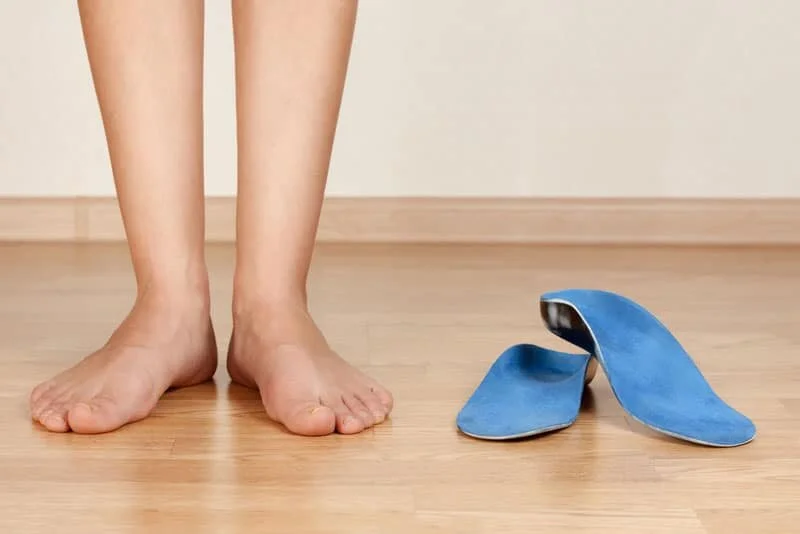
New orthotics change how your feet meet the ground, and your feet, ankles and legs need time to adapt. Think of it like new glasses: the prescription can be right and still feel odd for the first while. This guide covers the break-in period, shoes, care and when to have your orthotics checked.
A Simple Break-In Schedule
Patient guidance from hospital orthotics and podiatry services is consistent: build up gradually.
Day 1: wear them for about an hour.
Each day after: add about an hour, as long as they stay comfortable.
If they become uncomfortable, take them out and try again the next day.
Most people can wear them all day within one to two weeks.
Hold off on sport, running and long walks until you can wear them comfortably all day. Then build up gradually, starting with warm-ups or short sessions.
A mild ache in the feet or legs is common in the first couple of weeks and usually settles.
Shoes Matter
Remove the shoe’s factory insole so the orthotic sits flat, with its heel pushed right to the back of the shoe.
Choose shoes with a removable liner, a firm heel and laces or straps.
Shoes with little support, such as slip-ons, sandals and flimsy flats, tend to work poorly with orthotics.
Bring your orthotics when you shop for shoes.
You can move one pair between similar shoes.
Looking After Them
Wipe them with a damp cloth and let them air-dry. Do not soak them or dry them on a heater.
How Long Do They Last?
It depends on the materials, your activity level and how often you wear them. Hospital patient leaflets suggest at least a year and often two to three years. Firm shells tend to outlast the top covers and padding, which can often be replaced.
Have them checked if:
the shell is cracked or has flattened
the top cover is worn through
your old symptoms return
your feet have changed, or a child has grown
When to Call
Pain that is sharp, or an ache that is not easing after two to three weeks
Blisters, rubbing or pressure marks that do not fade
New pain in the knee, hip or back
Numbness or tingling
Custom orthotics are modular, so parts such as wedges, pads and top covers can often be adjusted without remaking the whole device. If you have diabetes or reduced feeling in your feet, check your feet daily and keep your physician or podiatrist involved.
Questions About Your Orthotics?
If your orthotics are not feeling right, book a visit so they can be checked. Dr. Michael Lau, Calgary Chiropractor, 3604 52 Ave NW #138, Calgary, AB T2L 1V9. Call (403) 282-4004 or book online.
Not sure whether you need custom orthotics at all? See Custom Orthotics vs. Store-Bought Insoles or the Custom Orthotics page.
Sources
East Sussex Healthcare NHS Trust. Insoles and functional foot orthoses: patient information.
The Dudley Group NHS Foundation Trust. Information about your insole or foot orthosis.
University Hospitals Birmingham NHS Foundation Trust. Insoles and functional foot orthoses.
Livewell Southwest Podiatry Services. Wearing your orthoses (insoles).
Royal Berkshire NHS Foundation Trust. Guidelines for use of functional foot orthoses (insoles).